

by Thierry Baudet
In his dystopian classic, The Managerial Revolution (1941), the American political scientist James Burnham coined the concept of “controlled democracy“. According to Burnham, the civil democracies of the second half of the 20th century would – more or less gradually – be overgrown with backroom bureaucratic networks that make the actual decisions, all far away from the electorate and public debate.
While this would slowly but surely erode the democratic mandate of governments, Burnham explicitly didn’t expect that this would lead to the dissolution of the European nation state – in name, that is.
“The many nations that are in fact being absolved will remain existent in name; they can function as administrative subdivisions, but have no sovereignty.”
Elections will also remain in place; they will provide managers valuable insights into the preferences of the consumer-citizen, while at the same time functioning as an exhaust valve to possible opposition forces. Burnham predicted a form of political theatre in the guise of sham elections between candidates who happen to be like-minded on every fundamental subject, who are paid to debate in front of clueless spectators in mock parliaments, while the results were known in advance – after all, the actual decisions have already been made.
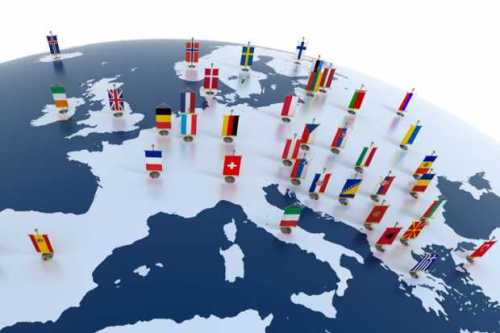 Not only did James Burnham’s work serve as the most important inspiration for George Orwell’s 1984, chances are Burnham also had a decisive influence on Jean Monnet and Robert Schumann – the founding fathers of the present day European Union. For after they tried to openly guide their “United States of Europe” through national parliaments, they chose, after the French parliament (while loudly singing the Marseillaise) voted down their plans in 1954, to use exactly the gradual and stealthy approach described by The Managerial Revolution to achieve their goals.
These Eurocrats label their strategy as “functionalism“, behind which the idea is that due to the so-called “spillover effect“, inevitably, ever more power ends up being centralised. One ‘function’ automatically forces another ‘function’. So: you sell open borders as a nice convenience, and after a while, you act surprised when they force you to adopt a centralised immigration policy. You present a monetary union as a facilitator of trade without having to hand over national sovereignty; and when the (inevitable) credit crisis presents itself, your push through a centralised budgetary system.
In the mendacious words of Monnet himself:
“We wish the community to take shape in a gradual process of change. Attempts to predict its final form are a contradictio in terminis.”
While he previously proclaimed to strive towards a federal European state, now all of a sudden it was an ‘open future’ he was after. He even went as far as to claim that it’s harmful to ask too many critical questions:
“Trying to anticipate the results will only smother ingenuity. Only by persevering, forwards and upwards, will new horizons present itself.”
In an attempt to provide some sort of philosophical justification for the European project, the German-American administrative scientist Ernst Haas wrote at the end of the 60’s that:
“We don’t have an alternative. We must seek refuge in graduality, in detours, in functionalism, if we wish to integrate the region. The functionalist who trusts in graduality and detours to fulfil his goals, must choose a strategy that unites the masses and alienates as few people as possible. Only with small steps and without a clear and logical plan, can he move in the right direction. For if he was to take great leaps, he would lose the support of many.”
Haas explains that walking down this path makes integration seem “almost self-evident” until it morphs “from mere customs union into an economic and political union.”
readmore>>
gatestone
Pic;Thierry Baudet, leader of the new Dutch political party Forum for Democracy

 Zeepertje.com - Facts Fun & News on ISLAM, "The religion of peace"